Marriage Biodata Format by Community
Marriage Biodata Format by Community
Brahmin: Across India. Identified by veda & shakha. Iyer: Tamil Nadu. Identified by sutra. Iyengar: Tamil Nadu & Karnataka. Identified by sect — vadakalai or thenkalai. Maratha: Maharashtra. Identified by kul. Nair: Kerala. Identified by tharavad. Nambudiri: Kerala. Identified by illam.
3
Templates
5 min
To download
Free
To create
In short
The biodata format barely changes across communities — what changes is which fields identify a family. Marathas give kul and devak, Nairs give tharavad, Brahmins give veda and sutra, Patels give the native gam. Muslim, Sikh, Christian, Buddhist and Parsi biodatas carry no horoscope block at all.
Published Reviewed by the MakeMyBiodata editorial team
Your details stay private
- Your photo and every field are encrypted with AES-256-GCM before they are saved
- Nothing is published, listed or shown to other users — this is a document maker, not a matrimony site
- We never sell or share your details with third parties
- Ask us to delete your record at any time and we will
What is a marriage biodata?
The biodata format barely changes across communities — what changes is which fields identify a family. Marathas give kul and devak, Nairs give tharavad, Brahmins give veda and sutra, Patels give the native gam. Muslim, Sikh, Christian, Buddhist and Parsi biodatas carry no horoscope block at all.
Start from the standard one-page layout — personal, then horoscope where it applies, then family, then contact. That skeleton is shared. Then add the one or two fields your community identifies families by, because their absence is what a reader notices first.
How to make your english biodata in 4 steps
- 1
Open the maker
Start with a blank biodata and pick the language you want it in — English, Hindi, Telugu, Tamil or Kannada.
- 2
Fill your details
A guided form covers personal, horoscope, education, family and contact. Rename, reorder, hide or add any field your community expects.
- 3
Pick a template and photo
Choose a design and a deity header, then upload a portrait photo and set the crop. The preview updates as you type.
- 4
Export what you need
One purchase unlocks all three outputs — Word to keep editing, PDF to print and forward, image to preview in a chat.
What to include in your biodata
What is being compared
- Brahmin — Across India. Identified by veda & shakha.
- Iyer — Tamil Nadu. Identified by sutra.
- Iyengar — Tamil Nadu & Karnataka. Identified by sect — vadakalai or thenkalai.
- Maratha — Maharashtra. Identified by kul.
- Nair — Kerala. Identified by tharavad.
- Nambudiri — Kerala. Identified by illam.
Mistakes to avoid
- Using a generic template that offers only gotra, when the community identifies families by kul, bari, tharavad or gam.
- Adding a rashi and nakshatra block to a biodata for a community that does not match horoscopes.
- Giving the current city as the native place — they are different fields and families read them differently.
- Guessing at a gotra or a sub-sect rather than asking an elder. A wrong value is worse than a blank one.
- Translating a community-specific field into English until it stops being recognisable — thirunakshatram is not simply “star sign”.
Marriage Biodata Format by Community: side by side
The biodata format barely changes across communities — what changes is which fields identify a family. Marathas give kul and devak, Nairs give tharavad, Brahmins give veda and sutra, Patels give the native gam. Muslim, Sikh, Christian, Buddhist and Parsi biodatas carry no horoscope block at all.
| Community | Religion | Identifying field | Matching rule |
|---|---|---|---|
| Brahmin | Hindu | Veda & shakha | Gotra exogamy is strictly applied — the same gotra is treated as the same lineage. |
| Iyer | Hindu | Sutra | Same-gotra matches are avoided. |
| Iyengar | Hindu | Sect — Vadakalai or Thenkalai | Gotra exogamy, plus the Vadakalai/Thenkalai distinction — many families treat it as a requirement rather than a preference. |
| Maratha | Hindu | Kul | Same kul and same devak are both avoided. |
| Nair | Hindu | Tharavad | Historically matrilineal, so the tharavad on the mother's side carries the weight that gotra does elsewhere. |
| Nambudiri | Hindu | Illam | Gotra exogamy, with the illam name used to place the family precisely. |
| Bunt | Hindu | Bari | Bari exogamy — descent is traced through the mother, so the bari does the work gotra does in patrilineal communities. |
| Reddy | Hindu | Intiperu (house name) | Gotra exogamy, with the intiperu used to distinguish families sharing a surname. |
| Kamma | Hindu | Intiperu (house name) | Gotra exogamy, with horoscope matching standard before a meeting is arranged. |
| Agarwal | Hindu | Family business | Same-gotra matches are avoided; many families also avoid the mother's gotra. |
| Maheshwari | Hindu | Khaap / gotra | Khaap exogamy is applied, and horoscope matching is common before families meet. |
| Marwari | Hindu | Family business | Gotra exogamy, with the native place in Rajasthan carrying real weight even for families settled elsewhere for generations. |
| Rajput | Hindu | Kul / clan | Clan exogamy is applied strictly, and several families also avoid the mother's and grandmother's clans. |
| Jat | Hindu | Gotra | Many Jat families avoid four gotras — the father's, mother's, and both grandmothers' — and also marriages within the same village. |
| Patel | Hindu | Sub-group — Leuva or Kadva | The Leuva/Kadva distinction and the gol — a defined circle of villages — historically governed who married whom, and both still… |
| Vokkaliga | Hindu | Bali / gotra | Bali exogamy is applied, and horoscope matching is usual before a meeting. |
| Lingayat | Hindu | Sub-sect | Matching happens largely within sub-sect, and the matha a family follows is often named. |
| Kayastha | Hindu | Sub-group | Gotra exogamy, with the sub-group named because it identifies the family's line within a widely dispersed community. |
| Khatri | Hindu | Got | Got exogamy is applied, and many families avoid the mother's got as well. |
| Arora | Hindu | Got | Got exogamy, commonly extended to the mother's got. |
| Yadav | Hindu | Gotra | Gotra exogamy, with village exogamy applied in many northern districts. |
| Chettiar | Hindu | Kovil (temple) | Among Nagarathars, the nine clan temples define exogamy — families of the same kovil do not intermarry. |
| Mudaliar | Hindu | Kulam / sub-group | Matching happens largely within sub-group, and jathagam matching is standard. |
| Nadar | Hindu | Sub-group | Matching is largely within sub-group and region, with jathagam matching usual. |
| Ezhava | Hindu | Nakshatram | Nakshatra porutham — star compatibility — carries most of the weight, as across Kerala. |
| Sindhi | Hindu | Nukh | Nukh exogamy is applied where families observe it; horoscope matching varies considerably between households. |
| Bengali Brahmin | Hindu | Bansha / kul | Gotra exogamy, with kosthi (horoscope) matching standard before families meet. |
| Kurmi | Hindu | Gotra | Gotra exogamy, with village exogamy applied in many districts. |
| Muslim | Muslim | Maslak / sect | There is no horoscope block. |
| Sikh | Sikh | Got | Got exogamy is applied, often extending to the mother's got. |
| Jain | Jain | Sect — Digambar or Shwetambar | Sect and sub-sect are checked first, then gotra exogamy. |
| Christian | Christian | Denomination | Denomination is the primary filter, and many families match within it. |
| Buddhist | Buddhist | Tradition | There is no horoscope block in Navayana practice. |
| Parsi | Parsi | Navjote | The community is small and largely endogamous, so biodatas circulate through community networks rather than open matrimonial si… |
| Maithil Brahmin | Hindu | Mool | Uniquely among Indian communities, matches are verified against the Panji Prabandh — a genealogical register maintained since t… |
| Kanyakubja Brahmin | Hindu | Mool / al | Gotra exogamy, with the mool checked as well since two families can share a gotra but belong to different lines. |
| Bhumihar | Hindu | Mool | Gotra exogamy, with the mool and native village both checked — matches within the same village are generally avoided. |
| Chitpavan Brahmin | Hindu | Kuldaivat | Gotra exogamy across the fourteen recognised lines, with kuldaivat named to place the family within the Konkan. |
| Deshastha Brahmin | Hindu | Veda — Rigvedi or Yajurvedi | The Rigvedi/Yajurvedi division is checked alongside gotra exogamy, and many families still prefer to match within their own bra… |
| Saraswat Brahmin | Hindu | Math | Gotra exogamy, with the math named because it distinguishes the sub-communities — Gaud Saraswat, Chitrapur and Rajapur Saraswat… |
| Lohana | Hindu | Nukh | Nukh exogamy is applied, and the community's global diaspora means the biodata often names the country of residence alongside t… |
| Thevar | Hindu | Sub-group | Matching happens largely within sub-group, with kootam exogamy applied and jathagam matching standard. |
| Gounder | Hindu | Kulam / kootam | Kootam exogamy is applied strictly, and the kuladeivam temple identifies the family line within the Kongu region. |
| Vishwakarma | Hindu | Sub-group by craft | Gotra exogamy, with the craft sub-group named since families have historically matched within it. |
| Arya Vysya | Hindu | Intiperu (house name) | Gotra exogamy, with the intiperu distinguishing families that share a surname. |
| Velama | Hindu | Intiperu (house name) | Gotra exogamy, with intiperu checked and jathakam matching usual before families meet. |
| Syed | Muslim | Biradari — Syed | Many Syed families prefer to match within the biradari, and maslak is checked early. |
| Ansari | Muslim | Biradari — Ansari | Matching is largely within biradari, with maslak checked. |
| Memon | Muslim | Jamaat | The jamaat and sub-group are checked first, and proposals often circulate through jamaat networks rather than public sites. |
| Syro-Malabar | Christian | Rite | The rite is the primary filter, and most families match within it. |
| Jat Sikh | Sikh | Got | Got exogamy, commonly extended to the mother's got, with village exogamy applied in many areas. |
| Ramgarhia | Sikh | Got | Got exogamy, with matching largely within the community. |
| Bengali Kayastha | Hindu | Kul / bansha | Gotra exogamy with the kul named, and kosthi matching standard. |
| Gujarati Brahmin | Hindu | Sub-group | Sub-group is checked alongside gotra exogamy, and many families still prefer to match within their own. |
What this means when you sit down to write one
Start from the standard one-page layout — personal, then horoscope where it applies, then family, then contact. That skeleton is shared. Then add the one or two fields your community identifies families by, because their absence is what a reader notices first.
Leaving out the field that matters is not a neutral omission. A Maratha biodata without a kul, or a Nair one without a tharavad, reads as incomplete to exactly the people it was written for, and the proposal stalls at the first exchange while someone asks.
The reverse is also true: adding horoscope fields to a Muslim, Sikh, Christian or Parsi biodata is not a safe default. Those communities do not match on kundli, and the block reads as copied from someone else's template.
Mistakes this comparison exists to prevent
Each of these follows directly from confusing the two, and each is visible to the family that receives the file.
- Using a generic template that offers only gotra, when the community identifies families by kul, bari, tharavad or gam.
- Adding a rashi and nakshatra block to a biodata for a community that does not match horoscopes.
- Giving the current city as the native place — they are different fields and families read them differently.
- Guessing at a gotra or a sub-sect rather than asking an elder. A wrong value is worse than a blank one.
- Translating a community-specific field into English until it stops being recognisable — thirunakshatram is not simply “star sign”.
Download formats compared
| Format | Best for | Editable later? |
|---|---|---|
| Word (DOCX) | Editing details anytime | Yes — fully editable |
| Printing & in-person meetings | No — fixed layout | |
| Image (PNG) | Fast WhatsApp sharing | No — share-ready |
Marriage Biodata Format by Community templates
Every design works in your language — pick one and make it yours.
Ganesha Classic
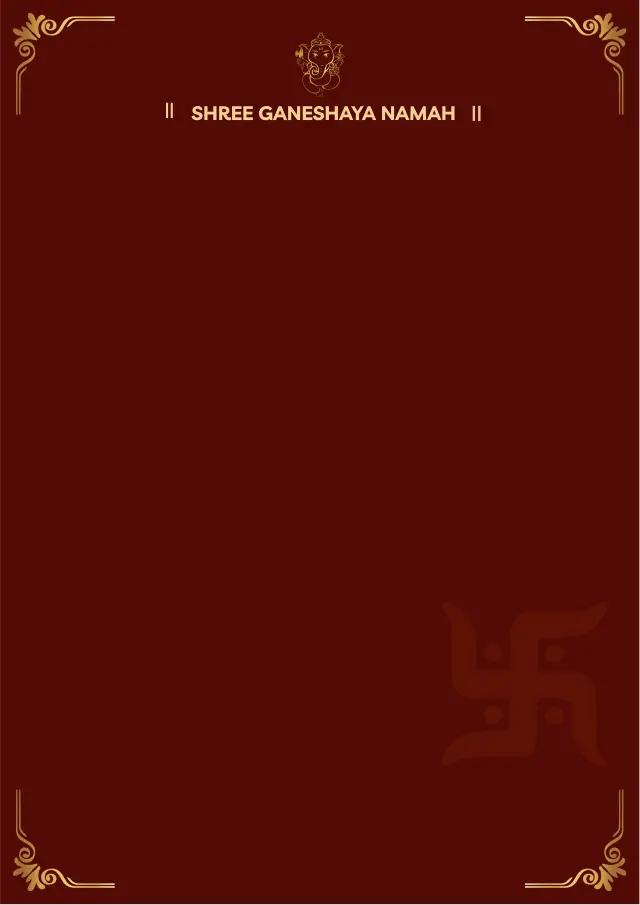
Ganesha Maroon

Rose Floral
Why families choose our maker
Brahmin — Across India. Identified by veda & shakha.
Iyer — Tamil Nadu. Identified by sutra.
Iyengar — Tamil Nadu & Karnataka. Identified by sect — vadakalai or thenkalai.
Maratha — Maharashtra. Identified by kul.
Nair — Kerala. Identified by tharavad.
Nambudiri — Kerala. Identified by illam.
What families say
“I had sent my job resume to a family friend and heard nothing back. Seeing the two side by side made it obvious what was missing.”
Nandini
Chennai
“The format table settled an argument at home — we sent the PDF, kept the Word file, and put the image in the group.”
Arvind
Nagpur
Frequently asked questions
Does the marriage biodata format change by caste?
The layout does not — one page, personal then family then contact. What changes is which fields identify a family: kul and devak for Marathas, tharavad for Nairs, veda and sutra for Brahmins, gam for Patels.
Which communities do not use horoscope details in a biodata?
Muslim, Sikh, Christian, Buddhist and Parsi biodatas conventionally carry no rashi or nakshatra block. Adding one reads as copied from a Hindu template.
What if I do not know my gotra or kul?
Ask an elder rather than guessing. A wrong lineage field is noticed immediately and is harder to walk back than a blank one, which nobody objects to.
Can one biodata work for every community?
The core of it can. Build the standard page, then add the one or two fields your own community expects — that is the whole difference in practice.
Make a biodata in another language
Guides from our blog
Further reading
Create your marriage biodata today
Free to make and preview — download when you are happy with it.
Create Biodata Now